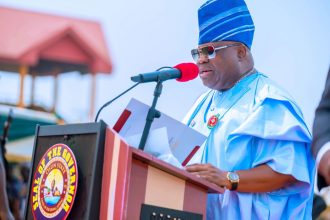


Oyo State Governor, Seyi Makinde, says he is fully prepared for the challenges and criticisms that come with public leadership, reaffirming that his administration will continue to pursue development that is fair, humane, and inclusive.
The governor disclosed plans to begin direct engagement with residents affected by the ongoing 110km Senator Rashidi Ladoja Circular Road Project, starting Wednesday.
Makinde made the remarks while presenting the 2026 Budget Proposal to the Oyo State House of Assembly, emphasising his commitment to a people-centred government.
He said he would personally visit the Circular Road corridor to listen to affected residents and consider all possible measures, including resettlement and adequate compensation.
Makinde noted that he anticipated both praise and criticism when he assumed office and remained undeterred by insults or threats to his life.
The governor clarified that his administration did not initiate any land acquisition for the Circular Road Project, citing documents from the previous government—published in a November 2018 edition of the Nigerian Tribune, which showed that 500 metres on each side of the road had already been acquired.
Describing the Circular Road as central to equity, growth, and shared prosperity, Makinde warned politicians attempting to exploit the project for personal gain, saying residents of the state are discerning.
Quoting him, Makinde said:
“When I took up this job, I envisaged situations like this. I came to do good for Oyo State. Progress must be people-centred, and we remain committed to ensuring that development is fair, humane, and inclusive.”
He added:
“I will honour my promise to visit, listen, and explore all possibilities, including resettlement and adequate compensation. I will start this week with a visit to Ologuneru.”
Makinde stressed the importance of building institutions rather than personality-driven systems, highlighting reforms such as the establishment of the Oyo State Anti-Corruption Agency (OYACA) and the Oyo State Rule of Law Enforcement Authority, aimed at strengthening governance, digitizing processes, and enhancing transparency.
According to him, “Our legacy will not be measured by buildings alone but by the values that sustain progress long after we have left office. Oyo State is moving from a consumptive economy to a productive one, with industries and commercial solid minerals exploration driving growth.”
He added that his administration has not failed in over six years and will continue to grow, innovate, and pursue shared prosperity.