
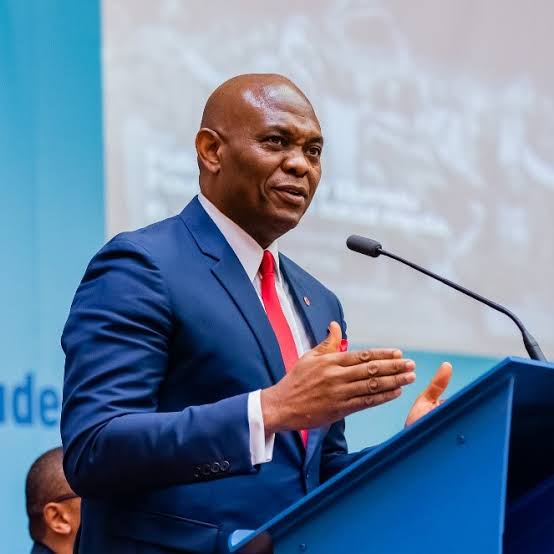
Nigerian businessman and philanthropist Tony Elumelu has called on African countries to embrace foreign investment and focus on future economic growth rather than colonial-era grievances.
Speaking to AFP during the Africa Forward Summit held in Nairobi and jointly hosted by France and Kenya, Elumelu stressed that Africa requires substantial international private-sector investment to unlock development opportunities across the continent.
“What we need in Africa in the 21st century… we need massive private global capital coming into Africa,” Elumelu told AFP on the sidelines of this week’s Africa Forward Summit in Nairobi, co-hosted by France and Kenya.
“Anyone that can help us address this is welcome in Africa,” he said, from the United States and France, to Middle Eastern nations, as well as Russia or China.
The 63-year-old entrepreneur is among Africa’s most influential business leaders and currently chairs major corporations including Heirs Holdings, Transcorp and United Bank for Africa. He is also the founder of the Tony Elumelu Foundation, which supports young entrepreneurs across Africa.
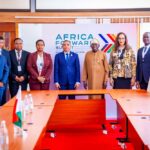
Elumelu recently joined the Africa France Impact Coalition at the invitation of French President Emmanuel Macron. The initiative seeks to strengthen trade and business ties between African and French companies.
France’s colonial history continues to generate criticism in parts of Africa, and tensions resurfaced during the summit after protesters in Nairobi attempted to disrupt the gathering while accusing France of “neo-colonialism”.
However, Elumelu dismissed such concerns and urged Africans to adopt a forward-looking mindset.
“We should stop this victim mentality,” he told AFP.
“We should be cognisant of the history, our history, but more importantly, we should commit to the future.
“We should, to a large extent, let the past be. President Macron was not born 100 years ago, this is a new age. And I commit to his commitment to Africa, and I believe he’s sincere,” he added.
According to Elumelu, one of the continent’s biggest challenges remains inadequate infrastructure, which continues to limit business growth and entrepreneurship.
“What our young entrepreneurs need in Africa is improvement in access to electricity, creation of mass transportation system, security, and ease of doing business,” he said.
“These are the things that are important.”
Africa has increasingly become a strategic destination for global powers seeking economic influence, with countries including the United States, China, Russia, Turkey, European nations and Gulf states deepening their engagement across the continent.
“It is a good place to be at, as Africans, at this point in time,” he said.
Elumelu further highlighted Africa’s youthful population as a major opportunity for growth, noting that job creation and digital access must remain top priorities.
“They need jobs, they need improved access to electricity, they need to join the internet… the AI bandwagon,” he said.
“What is important is providing this enablement, this infrastructure requirement, so that our young ones can take off.”
In conclusion, Elumelu maintained that Africa’s future prosperity depends on openness to investment, stronger infrastructure, and policies that empower the continent’s rapidly growing youth population.