
Former Vice President Atiku Abubakar and several economists have expressed concerns over President Bola Tinubu’s request for Senate approval of a $516 million external loan to fund sections of the Sokoto–Badagry Super Highway
The President recently wrote to the Senate seeking approval for a $516,333,070 facility to support segments of the 1,000-kilometre road project, a key infrastructure initiative of his administration.
The request, addressed to Senate President Godswill Akpabio, was read during plenary on Thursday, marking the start of legislative consideration.
According to the President, the loan—expected to be sourced from Deutsche Bank—will finance Sections 1, 1A, and 1B of the highway, linking Sokoto, Kebbi, Niger, Kwara, Oyo, Ogun, and Lagos states, stretching from Illela to Badagry.
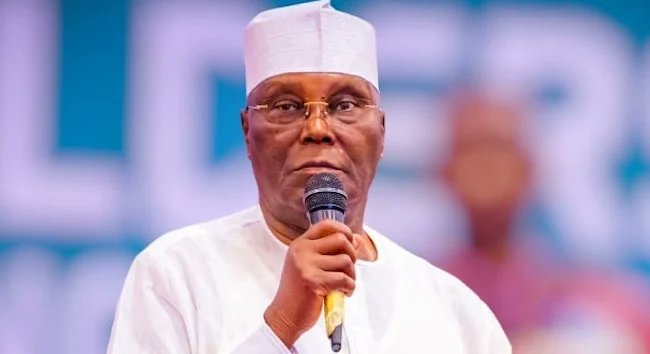
In a statement issued by his Senior Special Assistant on Public Communication, Phrank Shaibu, Atiku acknowledged the significance of the project but cautioned against Nigeria’s rising debt burden and lack of transparency in borrowing.
He said, “At a time when Nigeria is already groaning under the weight of unsustainable debt, the resort to yet another foreign loan—without transparent terms, clear cost-benefit analysis, and a credible repayment framework—raises profound questions about prudence and accountability.
“This is not a regional issue, nor should it be framed as one. The people of Northern Nigeria, like their counterparts across the country, deserve development that is sustainable, transparent, and not mortgaged against their future.
“What Nigerians expect is not just ambitious projects, but responsible financing. Development must not become a euphemism for deepening debt traps that generations yet unborn will be forced to repay.”
The former vice president also urged the National Assembly to subject the loan request to thorough scrutiny before granting approval.
“Nigeria must build, but Nigeria must not borrow blindly. Progress anchored on opacity and debt accumulation is neither progress nor leadership, it is postponement of crisis,” Atiku added.
Economists have also weighed in on the proposal, offering divergent views on its implications for the country’s fiscal outlook.
Professor of Economics and Public Policy at the University of Uyo, Akpan Ekpo, warned that Nigeria’s increasing reliance on external borrowing poses significant risks.
“The economy is getting too exposed to external debt, that’s my worry. The debt profile is rising alarmingly, and it’s worrisome and disturbing in the sense that we claim that we have almost reached our revenue target. Certainly, this windfall from oil revenues, what should it be used for?
“The windfall should go into infrastructure because when you keep borrowing, and we are not sure they have done enough cost analysis, whether the tolls they collect on the road will pay for it in the next nine years, it becomes a burden,” Ekpo said.
He added, “GDP does not pay debt, revenue pays debt, and our revenue profile is shaky. Most of our revenue comes from oil, which we do not control in terms of price or output, so it is an exogenous source. I worry that borrowing is getting too much, and there is no clear balance of contingency.”
Ekpo recommended alternative funding models such as Public-Private Partnerships, concessions, and Sukuk financing to reduce dependence on external loans.
“There are other options to build roads than borrowing. You can use Public-Private Partnerships, you can concession the road to private investors… The key issue is that we must retain more of the financing within the domestic economy so that it creates jobs and strengthens local capacity,” he said.
However, Chief Executive Officer of Economic Associates, Ayo Teriba, defended the borrowing plan, describing it as suitable for long-term infrastructure investment.
“As the report noted, the loan is going to fund a capital project that has a life well beyond the loan. The superhighway will open up income opportunities, and repayment will come from the income it creates. I do not see any good president who will not take this kind of opportunity, especially at a 5.3 per cent interest rate, which is far better than the nine per cent we have been paying,” Teriba said.
He added, “Any capital project funded by debt will outlive the loan, so you are not passing net debt to future generations but assets that create opportunities.”
Teriba, however, criticised the limited involvement of domestic financial institutions and called for reforms to unlock local funding.
“We have over N28tn trapped in CRR deposits earning zero interest. Why are Nigerian banks not part of these opportunities? It is time to rethink the CRR model… If properly structured, banks can deploy part of their sterilised liquidity into projects like this and earn returns while supporting national development,” he said.
President Tinubu had stated that the loan would support critical sections of the Sokoto–Badagry Super Highway, a project aimed at enhancing connectivity, reducing travel time between Sokoto and Lagos, and boosting economic integration.
The Senate has since referred the request to its Committee on Local and Foreign Debts for further legislative review.