
The Federal Government has unveiled a comprehensive plan to reset Nigeria’s electricity sector, targeting a stronger national grid, improved power supply, universal metering and renewed investor confidence.
The Minister of Power, Joseph Tegbe, disclosed this on Friday at a national media roundtable on the resetting of the power sector, saying the administration’s priority was to make electricity more available, reliable and financially sustainable.
Tegbe said the reset was not an admission that previous reforms had failed, but an effort to build on the reforms initiated by President Bola Tinubu while addressing structural weaknesses that have hindered the sector.
“Our objective is clear: to make electricity more available, make the grid more reliable, make the market financially sustainable and restore investor confidence,” he said.
According to the minister, Nigeria’s power sector has moved from policy discussions to practical implementation, particularly with the implementation of the Electricity Act, which allows states to develop electricity markets tailored to their economic realities.
He said the government was also addressing the sector’s long-running liquidity crisis through the Power Sector Bond initiative, designed to settle legacy debts owed to generating companies, gas suppliers and other market participants.
Tegbe said resolving the financial challenges was critical to restoring confidence, attracting fresh investment and enforcing commercial discipline across the electricity market.
He identified metering as a central component of the reform, noting that estimated billing had fuelled distrust between electricity providers and consumers for decades.
According to him, the Presidential Metering Initiative is aimed at achieving universal metering so that consumers have greater transparency and pay only for electricity actually consumed.
The minister said the Ministry of Power had inaugurated the Power Force, engaging 5,000 Nigerian youths in nationwide meter installation while creating a skilled workforce for the sector.
He added that the government had also made progress in resolving longstanding challenges surrounding meter procurement.
On electricity generation, Tegbe said Nigeria had consistently generated about 5,000 megawatts over the previous two weeks, attributing the improvement to better operational coordination, improved plant availability and stronger collaboration across the electricity value chain.
He, however, stressed that increased generation alone would not solve Nigeria’s electricity challenges, noting that power must also be efficiently transmitted, distributed and paid for.
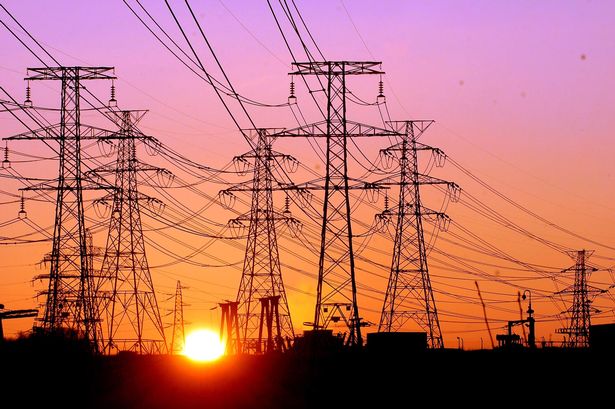
As part of the reset, the ministry will conduct a comprehensive technical audit of the national transmission network to identify ageing infrastructure, overloaded substations, weak transmission corridors, protection failures and other bottlenecks.
The government will also harmonise federal and state electricity regulation in collaboration with the Nigerian Electricity Regulatory Commission (NERC) and state regulatory commissions to prevent jurisdictional conflicts under the Electricity Act.
Tegbe said strategic investments would commence in three major transmission corridors—Lagos, Enugu–Port Harcourt and Abuja–Kaduna–Kano—under the Grid Stabilisation Programme.
He added that the government would address sector liquidity by reducing technical and commercial losses, modernising infrastructure and accelerating the deployment of smart meters.
Other measures include strategic asset centralisation, connecting underutilised electricity assets to industrial clusters and manufacturing hubs, and implementing the Super Grid Programme to strengthen the transmission backbone, improve redundancy and support higher power transfers.
The minister said visible improvements in electricity supply were expected within months, while a stronger grid, lower technical losses, improved market discipline, increased investment and expanded electricity access should be evident within the next two to three years.
Tegbe also dismissed concerns over an imminent electricity tariff increase.
“There is no policy by this administration to increase electricity tariffs beyond its current level,” he said.
He explained that the government’s immediate focus is improving service delivery, achieving universal metering and ensuring consumers pay only for the electricity they consume, while continuing to explore measures to protect vulnerable consumers.
“Resetting the sector is not about buzzwords. It is about execution, discipline, coordination and measurable outcomes,” Tegbe said, stressing that the success of the reforms would ultimately be judged by improvements in the daily lives of Nigerians.