
The Federal Government has reaffirmed its commitment to deepening strategic health cooperation with China, particularly in medical technology, hospital development, diagnostics, digital health, artificial intelligence, health workforce development and local manufacturing.
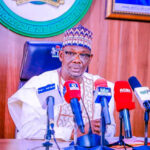
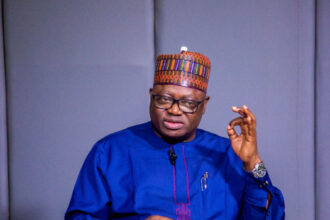
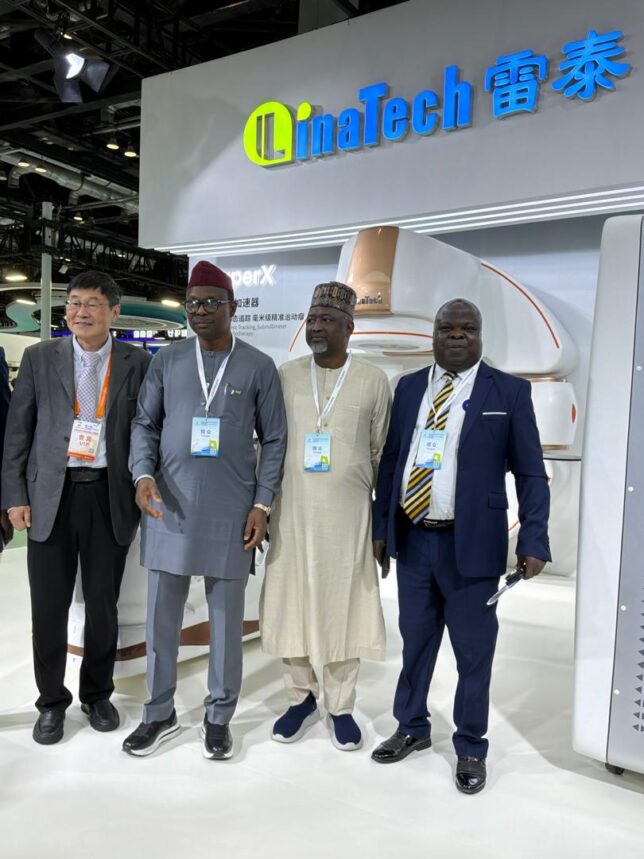
The Minister of State for Health and Social Welfare, Dr Iziaq Adekunle Salako, stated this while delivering Nigeria’s ministerial remarks at the 32nd China International Medical Equipment Exhibition and Scientific Conference, China-HOSPEQ 2026, at the China National Convention Centre in Beijing.
Salako said the conference’s focus on China-Africa hospital collaboration, artificial intelligence, appropriate technologies, capacity building and laboratory medicine aligns with Nigeria’s efforts to strengthen its partnership with China and expand cooperation beyond traditional trade relations.
He described China-HOSPEQ as more than an exhibition of medical equipment, noting that it provides a platform for dialogue, innovation, knowledge exchange and strategic partnerships capable of translating technological advancement into improved health outcomes.
The Minister said the Federal Government, under President Bola Ahmed Tinubu’s Renewed Hope Agenda, is implementing reforms aimed at transforming Nigeria’s health sector.
He identified strengthening primary healthcare, improving access to quality and affordable healthcare, expanding diagnostic and specialised services, accelerating digital health transformation, strengthening the health workforce and promoting local production of medicines, medical devices and diagnostics as key priorities.
According to him, achieving these objectives requires stronger institutions, sustainable financing, innovative technologies, skilled human resources and strategic international partnerships.
“For Nigeria, international platforms such as China-HOSPEQ provide valuable opportunities to identify technologies and innovations that are appropriate, affordable, scalable and responsive to our health-system needs,” he said.
Salako noted that Nigeria-China health cooperation has continued to expand, with opportunities in hospital development, medical technology, diagnostics, digital health, research, workforce development and local manufacturing.
He also highlighted collaboration in pharmaceutical manufacturing, medical equipment procurement and maintenance, as well as specialised training in traditional and phytomedicine.
The Minister welcomed the growing emphasis on China-Africa health cooperation, particularly initiatives aimed at strengthening hospital collaboration and institution-to-institution partnerships across the continent.
However, he cautioned that sustainable health-system transformation cannot be achieved through the provision of medical equipment alone.
He stressed the need to ensure that equipment is appropriate to local contexts, health workers are adequately trained, maintenance and quality-assurance systems are established, and technologies are effectively integrated into resilient national health systems.
Salako said Nigeria remains open to deeper collaboration with China and other international partners in medical equipment and health technologies, hospital development and clinical engineering, laboratory medicine and diagnostics, digital health and artificial intelligence, research and innovation, health workforce development, technology transfer, local manufacturing and health emergency preparedness.
He further noted that global health challenges, including pandemics, antimicrobial resistance, emerging infectious diseases, non-communicable diseases, climate-related health threats and health inequalities, require collective and coordinated international action.
While wishing the organisers and participants of China-HOSPEQ 2026 a successful and impactful conference, the Minister called for the opportunities provided by the event to be translated into practical partnerships and sustainable investments in Nigeria’s health sector.
“Let us move from exhibition to implementation, from innovation to impact, and from partnership to sustainable capacity,” he said.