
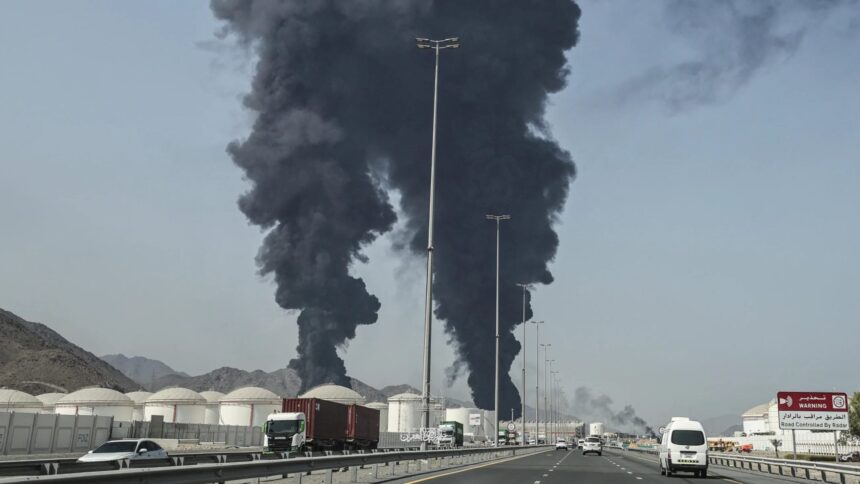
No fewer than 141 people, including a Nigerian, were injured after Iran fired multiple missiles at the United Arab Emirates amid rising tensions in the region.
Authorities also confirmed that six people were killed during the attacks, as the UAE’s air defence systems intercepted several aerial threats.
The development was disclosed by the United Arab Emirates Ministry of Defence in a statement posted on its official X account.
According to the ministry, the country’s air defence systems engaged nine ballistic missiles and 33 unmanned aerial vehicles (UAVs) launched from Iran on March 14.
The ministry said the interceptions were part of an ongoing wave of attacks since what it described as the “onset of blatant Iranian aggression.”
It added that the country’s defence forces have repeatedly activated air defence systems to neutralise incoming threats targeting the UAE.
Providing a broader breakdown, the ministry stated that since the start of the hostilities, UAE air defences have intercepted 294 ballistic missiles, 15 cruise missiles, 1,600 UAVs
The attacks reportedly affected residents and workers from numerous countries living in the UAE.
Those injured include nationals from the UAE as well as citizens of Egypt, Sudan, Ethiopia, the Philippines, Pakistan, Iran, India, Bangladesh, Sri Lanka, Azerbaijan, Yemen, Uganda, Eritrea, Lebanon, Afghanistan, Bahrain, Comoros, Türkiye, Iraq, Nepal, Nigeria, Oman, Jordan, Palestine, Ghana, Indonesia and Sweden.
The ministry confirmed that the six fatalities included citizens of the UAE, Pakistan, Nepal and Bangladesh.
Officials, however, did not specify the exact locations where the casualties occurred.
The defence ministry stressed that the country’s military remains prepared to respond to any threat.
It stated that security forces would firmly confront attempts to undermine the nation’s sovereignty, security and stability, while safeguarding national interests.
Meanwhile, the government of Qatar has filed a formal complaint to the United Nations and the United Nations Security Council over what it described as repeated Iranian military aggression.
In a statement, Qatar’s foreign ministry said the complaint was submitted by the country’s Permanent Representative to the UN, Sheikha Alya Ahmed bin Saif Al-Thani, to the UN Secretary-General António Guterres and the president of the Security Council for March, Michael Waltz.
The communication was intended to inform the UN about what Qatar described as Iranian aggression and its security implications for the region.
Amid the escalating crisis, Donald Trump said several countries would deploy warships alongside the United States to ensure the strategic Strait of Hormuz remains open.
Trump stated on his Truth Social platform that nations affected by disruptions to the vital global shipping route would work together to secure it.