

The United Nations said on Tuesday it has distributed food parcels to one million people in Gaza since the ceasefire, but warned that the humanitarian situation remains dire and that it is “still in a race to save lives.”
The UN’s World Food Programme (WFP) urged that all border crossings into Gaza be opened to allow more aid into the famine-hit territory, lamenting that no explanation has been given for the continued closure of northern crossings with Israel.
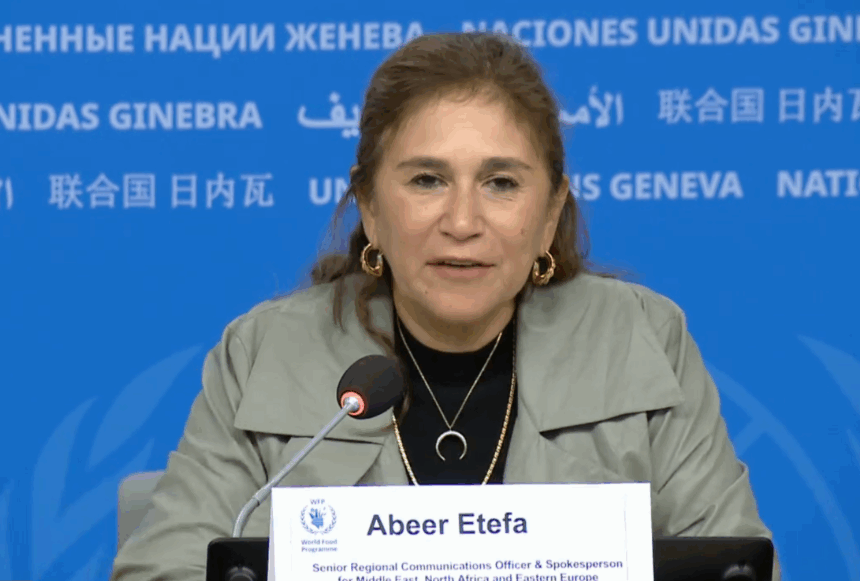
“Three and a half weeks into the ceasefire in Gaza, we have distributed food parcels to around one million people across the Gaza Strip,” said WFP’s Middle East spokeswoman, Abeer Etefa, during a briefing in Geneva from Cairo.
“That’s part of the broad operation to push back hunger in Gaza.”
Etefa said WFP’s goal is to reach 1.6 million people with food parcels — each designed to feed a family for ten days. However, she warned that achieving that target requires “more access, more border crossings to be opened, and more access to key roads inside Gaza.”
The US-brokered ceasefire between Israel and Hamas, which began on October 10, has allowed humanitarian agencies to expand operations, but access remains severely limited.
WFP has so far opened 44 of the 145 planned food distribution points, with an estimated 700,000 people receiving fresh bread daily from 17 supported bakeries — nine in southern and central Gaza and eight in the north. The agency aims to increase that number to 25 bakeries.
Despite modest improvements, Etefa said food consumption levels are “well below pre-conflict levels.” Most families are subsisting on cereals and pulses, while meat, eggs, vegetables, and fruits are “extremely rarely” available.
Nour Hammad, WFP’s spokeswoman in Gaza, noted that commercial food prices remain “beyond the reach of most families.” She said, “An apple now costs as much as a kilogram of apples did before the war broke out in October 2023.”
The WFP says it has only managed to bring in about half of the food required to meet the population’s needs.
“The needs are overwhelming,” Etefa stressed. “We are in a race to save lives.”
She added that WFP trucks currently enter Gaza only through the Kerem Shalom and Kissufim crossings, significantly restricting the volume of supplies and complicating aid delivery to northern Gaza.
“We actually haven’t been given clear answers on why the northern crossing points are still closed,” she said.