
The Federal Government has dismissed claims that President Bola Tinubu’s administration borrowed about ₦80 trillion, describing the figures circulating in public as misleading.
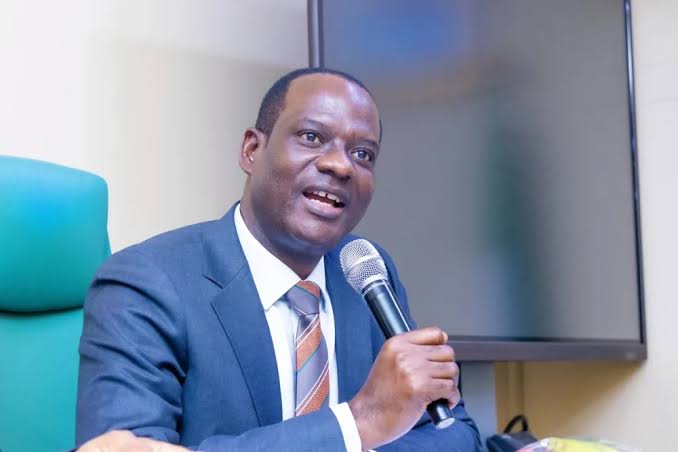
Minister of Finance and Coordinating Minister of the Economy, Wale Edun, told the Senate Committee on Finance that the increase in Nigeria’s public debt was largely due to the revaluation of foreign debt following the naira’s depreciation and the recognition of inherited liabilities, rather than fresh borrowing.
Speaking during an interactive session at the National Assembly, the minister said the Tinubu administration had not drawn even half of the external loans approved by the National Assembly.
“Many people assume that once the National Assembly approves a borrowing plan, the money has already been borrowed. That is not the case,” he said, explaining that approvals under the Medium-Term Expenditure Framework only authorise borrowing up to a specified limit when necessary.
According to him, although lawmakers approved about $20 billion in external borrowing last year, the government has utilised less than half of the amount.
Edun said Nigeria’s public debt stood at about ₦75 trillion when President Tinubu assumed office, but the naira’s depreciation added more than ₦40 trillion to the debt stock through exchange rate revaluation.
He added that another ₦33 trillion came from the securitisation of Ways and Means advances obtained by the previous administration from the Central Bank of Nigeria.
“It was not new borrowing; it was simply bringing previously existing obligations onto the official debt books,” he said.
The minister also clarified that much of the government’s domestic borrowing is used to refinance maturing debts rather than accumulate new obligations.
He stressed that all borrowing complies with the Fiscal Responsibility Act, which permits borrowing only for capital projects and human development, adding that every loan must generate greater economic value than its cost.
Edun said increased government spending on debt servicing, the new national minimum wage, salary adjustments and programmes such as the Nigerian Education Loan Fund (NELFUND) continues to require budget financing despite improved revenue.
He disclosed that more than one million students have benefited from the education loan scheme.
Highlighting the administration’s economic performance, the minister said Nigeria’s Gross Domestic Product grew by 3.8 per cent in the first quarter of 2026, tax revenue reached ₦21.6 trillion in the first half of the year—a 49 per cent increase from the corresponding period in 2025—and non-oil taxes now account for 76 per cent of total tax revenue.
He added that external reserves have risen above $51 billion, the highest level in 17 years, while inflation has begun to ease.
Chairman of the Senate Committee on Finance, Senator Mohammed Sani Musa, described the presentation as the most comprehensive financial briefing the committee had received since its inauguration but called for greater transparency on the country’s debt profile, budget implementation and the impact of import duty waivers on food prices.