

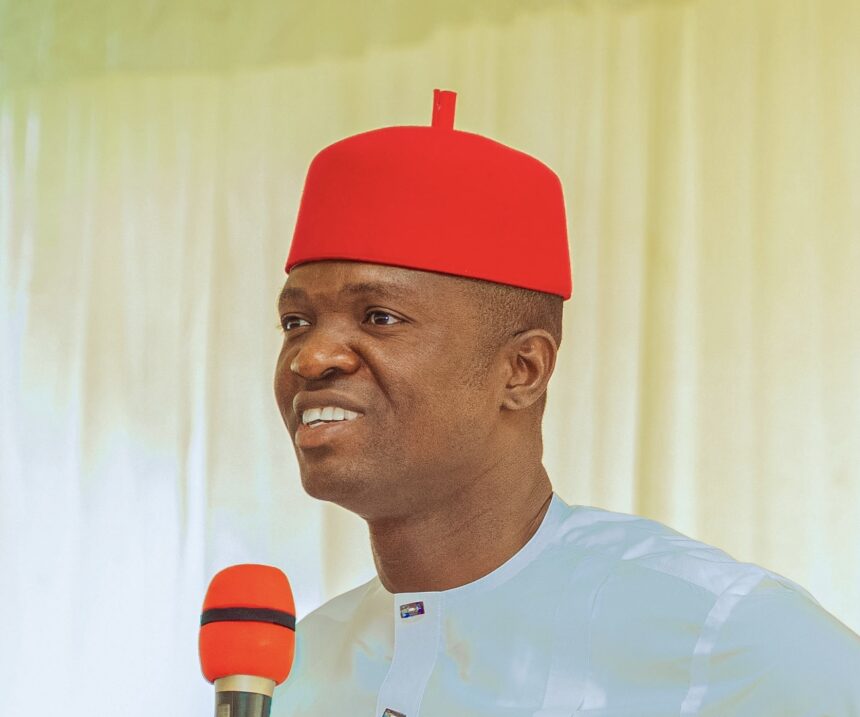
Ebonyi State Governor, Francis Nwifuru, has approved a Christmas bonus of ₦150,000 for every civil servant in the state for the 2025 festive season.
Governor Nwifuru announced the bonus on Sunday during a church service at the Government House Chapel in Abakaliki. He said the gesture reflects his administration’s commitment to improving the welfare of civil servants despite declining revenue accruing to the state over the past year.
The governor also dismissed reports suggesting stagnation in the construction of the Vincent Agwu Nwankwo Flyover, popularly known as VANCO, describing the project as a major infrastructural milestone of his administration.
“You cannot find any state in Nigeria that is doing such a flyover currently,” Nwifuru said at the event.
Explaining the technical demands of the massive project, the governor said the flyover, when completed, would transform the state’s landscape and give it a significant facelift. He criticised what he described as “social media contractors” for misrepresenting the progress of the project.
Nwifuru maintained that his administration is determined to position Ebonyi State among regions with advanced and modern infrastructure.
“We are doing it not because we have money. We are doing it because we want to sign our signature in the annals of history,” he said.
He added that Ebonyi State aims to be recognized globally for good governance driven by modern infrastructure development.
In August, the governor approved an increase of ₦20,000 in the minimum wage, raising the pay of public servants in the state to ₦90,000 with immediate effect. The Ebonyi State Government said the increment was in line with Governor Nwifuru’s People’s Charter of Needs Agenda.
In July 2024, President Bola Tinubu signed the new minimum wage bill into law after its passage by the National Assembly, replacing the Minimum Wage Act of 2019. The new law raised the national minimum wage from ₦30,000 to ₦70,000, ending months of negotiations involving labour unions, the private sector, and government authorities.
However, several states are yet to commence full implementation of the revised wage structure.