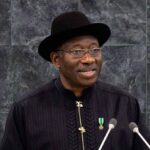

Chairman of the Independent National Electoral Commission (INEC), Joash Amupitan, has called for stronger collaboration with the Nigeria Police Force ahead of the 2027 general elections, stressing that security remains central to credible electoral processes.
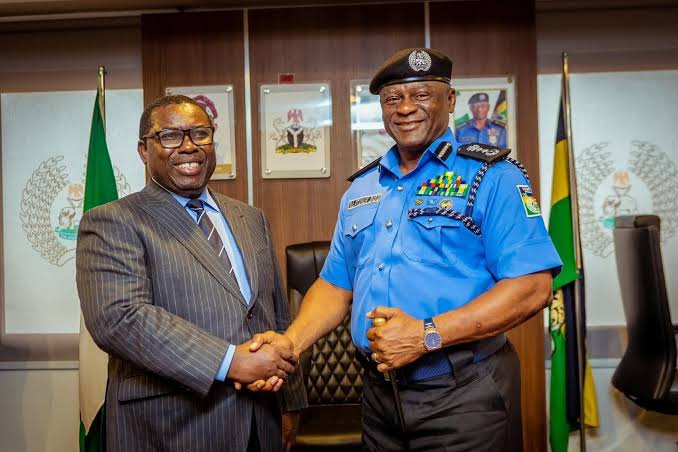
In a statement issued on Thursday by INEC Editor-in-Chief, Victoria Eta-Messi, the commission said Amupitan made the remarks during a courtesy visit to the Inspector General of Police, Olatunji Disu, on Wednesday.
According to the statement, the INEC chairman formally sought the support and cooperation of the police as preparations intensify for the 2027 elections.
Congratulating Disu on his appointment, Amupitan expressed confidence in the police chief’s leadership and experience.
“We are confident that your vast experience and dedication will greatly enhance our collective efforts towards ensuring a safe and secure electoral process,” he said.
Amupitan noted that preparations for the 2027 elections are already underway, with presidential and National Assembly elections scheduled for January 16, 2027, while governorship and State Houses of Assembly elections are fixed for February 6, 2027.
He explained that the release of the election timetable and the commencement of political party activities, including congresses and conventions, effectively mark the activation of the electoral process and heighten security concerns.
The INEC chairman also referenced Section 84 of the Electoral Act 2026, which provides for direct primaries and consensus arrangements in candidate nominations.
He further briefed the police leadership on upcoming off-cycle governorship elections in Ekiti and Osun states, as well as pending bye-elections nationwide.
“These elections are crucial milestones in Nigeria’s democratic journey, and it is imperative that they are conducted peacefully and seamlessly,” he said.
Highlighting challenges confronting Nigeria’s electoral system, Amupitan identified vote trading, electoral malpractice, violence, and insecurity as major threats to public trust and national stability.
“The scale of insecurity across various parts of the country presents a threat to the conduct of free and fair elections. It is essential that we carry out thorough security risk analyses ahead of the elections,” he stated.
He also described the Inter-Agency Consultative Committee on Election Security (ICCES) as the operational backbone of election security management.
“Our success depends on ICCES moving from reactive policing to proactive intelligence coordination,” he said.
Responding, IGP Disu assured INEC of the police force’s readiness to provide adequate security throughout the electoral process.
He reaffirmed the police’s constitutional role as the lead agency for election security, pledging professionalism, neutrality, and strict compliance with electoral laws.
“We will ensure that we enforce electoral laws firmly and we will do it professionally,” the IGP said.
Disu disclosed that the force has already commenced nationwide threat assessments and intelligence mapping to identify potential flashpoints ahead of the elections.
He listed political violence, illegal arms proliferation, cyber manipulation, voter intimidation, misinformation, and attacks on electoral infrastructure among key security concerns requiring proactive intervention.
According to him, intelligence-led deployments and preventive policing strategies will be prioritised to neutralise threats before they escalate.
The police chief also assured INEC of adequate protection for electoral officials, sensitive materials, collation centres, and other critical infrastructure during the polls.
He warned that officers engaging in partisan conduct or unethical behaviour would face disciplinary and legal action, while advocating stronger inter-agency collaboration through joint training, intelligence sharing, and coordinated communication strategies.
Disu further revealed plans to engage political parties through peace accords and stakeholder forums aimed at promoting peaceful conduct before, during, and after the elections.