
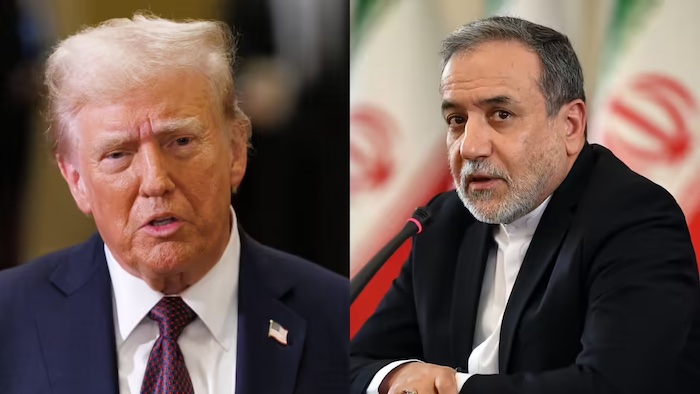
Global oil prices dipped in Asian trading on Wednesday after Donald Trump signalled a potential agreement with Iran, raising hopes of easing geopolitical tensions in the region.
Brent crude, the international benchmark, declined by 1.7 per cent to $108 per barrel, while US crude futures dropped by 1.6 per cent to $100.60, reversing part of the gains recorded earlier amid escalating Middle East tensions.
The market reaction followed Trump’s indication that the United States would temporarily halt “Project Freedom” — a military-backed initiative aimed at securing shipping routes through the Strait of Hormuz — to create space for diplomatic engagement.
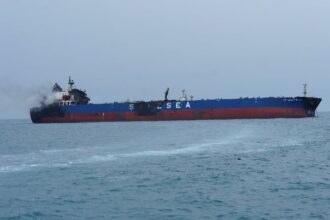
The Strait of Hormuz, a critical global energy corridor responsible for roughly a fifth of oil and gas shipments, has remained a focal point of recent tensions after Tehran threatened to target vessels in response to US-Israeli strikes that began on February 28, 2026.
In a social media post, Trump said the pause would last “a short period of time” to assess whether a “Complete and Final Agreement” could be reached with Iranian officials, adding that “great progress” had been made in negotiations.
Despite the diplomatic overture, Washington is expected to maintain restrictions on vessels linked to Iranian ports, signalling continued economic pressure on Tehran.
Market analysts say the development suggests a possible shift toward diplomacy, though uncertainties remain. Charu Chanana, an investment strategist at Saxo Bank, cautioned that the situation is still fluid.
“The key question for oil traders is whether this leads to real progress in reopening trade through the Strait of Hormuz,” she said, noting that concrete outcomes are yet to emerge.
Oil prices had surged by more than six per cent earlier in the week amid intensified attacks across the region but have since moderated as investors reacted to signs of potential de-escalation.
Also commenting on the situation, US Secretary of State Marco Rubio suggested that initial objectives of joint US-Israeli operations in Iran had been achieved.
“We would prefer the path of peace. What the president would prefer is a deal,” Rubio said.
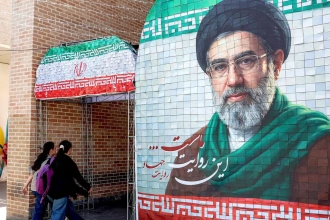
Iran has not formally responded to the latest US statements. However, Mohammad Ghalibaf signalled a firm stance, indicating that Tehran’s response to the situation is ongoing.
Tensions continue to test a fragile ceasefire announced on April 8, 2026, with both sides trading accusations over attacks on vessels and oil infrastructure in the region.
The evolving situation remains a key driver of volatility in global energy markets, as traders closely monitor diplomatic developments and security risks in one of the world’s most critical oil transit routes.