
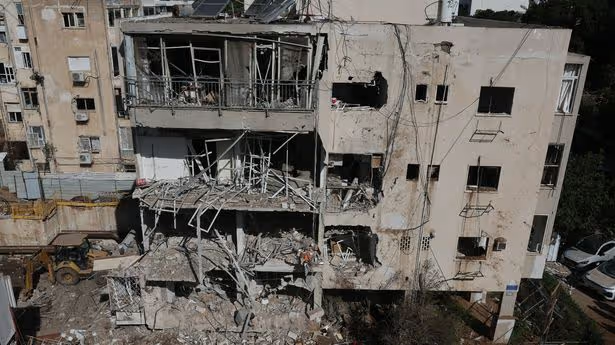
Iran launched a fresh wave of missile attacks on Israel on Tuesday, 24 March 2026, striking Tel Aviv and causing damage to buildings as well as injuries to several people.
Scenes from Israel’s commercial hub showed debris scattered across streets and structural damage to residential buildings, while emergency responders attended to at least four individuals reported to have sustained minor injuries across multiple locations.
Tel Aviv Mayor Ron Huldai confirmed that a “direct strike” hit a building in an upscale neighbourhood, with visuals showing the facade of a three-storey structure severely damaged.
Israeli media reports suggested the destruction may have been caused by a cluster munition missile carrying multiple warheads, each loaded with significant explosive capacity.
The attack came amid growing uncertainty over diplomatic efforts to end the three-week conflict in the Middle East.
Iranian media reported that US-Israeli warplanes had earlier targeted two gas facilities and a pipeline, hours after United States President Donald Trump announced a pause in planned strikes on Iranian energy infrastructure following what he described as “very good” talks.
Trump said his administration was engaging with an unidentified “top person”, warning that failure of negotiations within five days would lead to continued military action.
“we’ll just keep bombing our little hearts out”.
However, Iran’s parliamentary speaker, Mohammad Bagher Ghalibaf, dismissed claims of ongoing negotiations, insisting that “no negotiations” were taking place and accusing Trump of attempting “to manipulate the financial and oil markets.”
Markets reacted sharply to the mixed signals, with stock prices rising and oil markets briefly stabilising following Trump’s announcement, which came ahead of a deadline he had issued for Iran to reopen the Strait of Hormuz shipping route.
Reports by US media indicated that American envoys, including Steve Witkoff and Jared Kushner, may meet an Iranian delegation in Pakistan later in the week, with Vice President JD Vance also expected to participate.
Responding to the reports, White House spokesperson Karoline Leavitt cautioned that “speculation about meetings should not be deemed as final until they are formally announced by the White House.”
Meanwhile, Pakistan’s Prime Minister, Shehbaz Sharif, disclosed that he had spoken with Iran’s President but Masoud Pezeshkian, offering Islamabad’s support toward de-escalation efforts.
Iran’s foreign ministry spokesperson, Esmaeil Baqaei, also acknowledged receiving messages from “some friendly countries indicating a US request for negotiations aimed at ending the war”, but maintained that no talks had taken place, according to the state-run IRNA news agency.