

The Academic Staff Union of Universities (ASUU) has renewed its demand for the payment of withheld salaries and resolution of other outstanding welfare issues affecting university lecturers, warning that the Federal Government must address the grievances to ensure stability in Nigeria’s public universities.
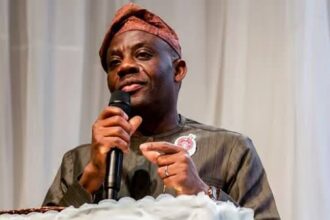
ASUU President, Prof. Christopher Piwuna, made the demand on Friday while briefing journalists at the union’s secretariat at the University of Jos in Plateau State.
Piwuna said the Federal Government must urgently resolve all outstanding issues concerning the welfare of academic staff and matters arising from the December 2025 Federal Government of Nigeria-ASUU Agreement.
He said resolving the issues was critical to restoring confidence among university lecturers and creating the conditions necessary for effective teaching, research and learning in public universities.
The ASUU president also used the briefing to raise broader concerns about Nigeria’s socio-economic challenges, calling for a fundamental shift in government policies ahead of the 2027 general elections.
He urged political parties and candidates to make the welfare of Nigerians, job creation, poverty reduction, education and economic development central to their programmes rather than relying on policies that provide temporary relief without addressing the structural causes of hardship.
Piwuna particularly criticised what he described as IMF and World Bank-driven “poverty alleviation” policies, arguing that they should be replaced with more participatory and inclusive programmes designed around Nigeria’s peculiar circumstances.
He said Federal and sub-national governments must prioritise agricultural and industrial production, social protection and other productive sectors capable of creating jobs and reducing the country’s dependence.
The union leader also called on the government to suspend unnecessary borrowing and explore sustainable alternative sources of financing development projects that have direct relevance to the lives and livelihoods of Nigerians.
On corruption, Piwuna called for stronger measures to tackle financial leakages, including the recovery of stolen public resources and improved accountability in the management of public funds.
He also advocated a tax system that places a greater burden on wealthy Nigerians, arguing that those with greater financial capacity should contribute more towards national development.
“As an underdeveloped country yearning for rapid development, it’s the rich that must be taxed to give the poor a life worth living,” Piwuna said.
ASUU Calls for Comprehensive Education Reform
On education, the ASUU president called for a comprehensive review of Nigeria’s education system to make it more responsive to the country’s socio-economic, cultural, technological and developmental realities.
He said Nigeria should move away from simply replicating educational models developed for other societies and instead develop a system capable of addressing its peculiar challenges and development needs.
Piwuna called for greater investment in research, technical education, agriculture, innovation and skills development, stressing that these areas were essential to producing the manpower required to drive national development.
He said properly funded research and technical education would also help reduce unemployment by equipping young Nigerians with relevant skills and creating pathways into productive sectors of the economy.
The union further urged Federal and State Governments to address the infrastructure and funding challenges confronting public universities, saying sustainable investment was necessary to reverse the decline in the quality of higher education.
Piwuna stressed that the welfare of academic staff must remain central to any meaningful reform of the university system, noting that lecturers could not effectively discharge their responsibilities in an environment where agreed conditions of service remained unresolved.
He said implementing the outstanding aspects of the December 2025 FGN-ASUU Agreement would go a long way towards restoring industrial harmony and enabling lecturers to concentrate on teaching, research and community service.
The ASUU president maintained that the challenges confronting Nigerian universities could not be separated from the wider economic difficulties facing the country.
He therefore called on governments at the Federal, State and Local Government levels to redirect their socio-economic policies and projects towards the people, whom they hold public resources in trust for.
With the 2027 elections approaching, ASUU urged Nigerians to critically assess the policies and programmes being presented by political parties and candidates, particularly their plans for education, employment, poverty reduction, production and social protection.
The union insisted that Nigeria requires policies capable of transforming its productive capacity and reducing dependence rather than measures that merely manage the symptoms of poverty.
Piwuna said ASUU remained committed to engaging the government and other stakeholders towards finding lasting solutions to the challenges confronting Nigeria’s university system and the wider society.