

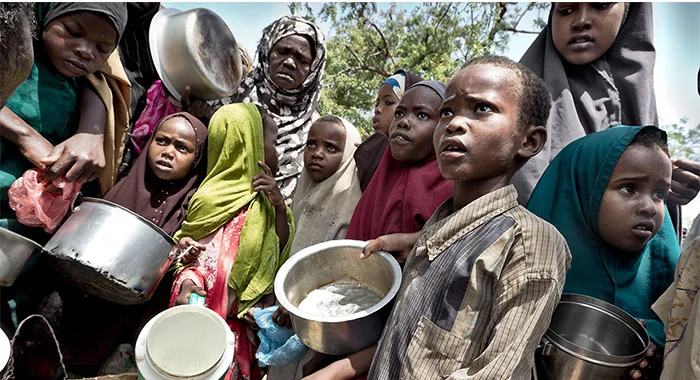
Africa has become the continent with the largest number of people facing hunger for the first time, according to a new United Nations report on global food security and nutrition.
The report, released on Tuesday by the Food and Agriculture Organization (FAO) and four other UN agencies, found that while global hunger has continued to decline gradually, progress has been uneven across regions.
FAO Director of Agrifood Economics, David Laborde, said the global burden of hunger has shifted from Asia to Africa.
“The centre of gravity of hunger has shifted from Asia to Africa,” he said.
According to the report, about 309 million people in Africa—roughly 20 per cent of the continent’s population—experienced hunger in 2025, compared with 292 million people in Asia, representing six per cent of that region’s population.
Globally, the proportion of people facing hunger declined from 8.6 per cent in 2022 to 7.8 per cent in 2025, reducing the number of undernourished people by about 43 million to 645 million.
However, the UN noted that global hunger levels remain higher than they were before the COVID-19 pandemic.
The report also showed that undernourishment in Africa has been rising since 2017, although the latest estimates indicate signs of improvement in 2025.
In addition, the share of Africans unable to afford a healthy diet has increased since 2021, even as the figure has declined in other regions.
According to the report, about 66.6 per cent of Africans cannot afford a healthy diet—more than twice the proportion recorded in Asia.
The UN urged African governments to prioritise the transformation of the animal-source food sector, describing it as the most expensive food group on the continent.
It also attributed Africa’s worsening food insecurity to climate-related shocks and armed conflicts, particularly in Sudan and the Democratic Republic of the Congo.
The UN had earlier warned that about 20 million people in Sudan face acute food insecurity because of the ongoing conflict, while prolonged instability in the Middle East could push millions more into hunger.
Laborde said the effects of rising energy and fertiliser costs linked to the Middle East conflict remain limited for now but cautioned that the crisis is far from over.