
The World Health Organization (WHO) has significantly revised its Ebola outbreak figures in Central Africa, reducing the number of suspected cases from more than 900 to 116 after further investigations and laboratory testing.
In an update released on Tuesday, the health agency said 116 suspected Ebola cases remain under observation in the Democratic Republic of Congo (DRC), a sharp decline from the 906 cases previously reported.
At the same time, confirmed infections have risen to 321 in the DRC, with 48 recorded deaths linked to the outbreak. In neighbouring Uganda, authorities have confirmed nine cases, including one fatality.
WHO spokesperson Christian Lindmeier explained that the reduction in suspected cases does not indicate a sudden improvement in the outbreak but reflects the outcome of ongoing testing and case verification.
According to him, many individuals initially classified as suspected Ebola patients were later found to be suffering from other illnesses that present similar symptoms during the early stages.
He noted that anyone exhibiting symptoms consistent with Ebola is initially recorded as a suspected case until laboratory tests determine the actual cause of illness.
“Many of those cases were eventually ruled out after testing showed they were linked to other diseases,” Lindmeier said.
Health officials found that several patients were suffering from conditions such as malaria, meningitis, typhoid fever and other infections rather than Ebola.
As a result, those individuals were removed from the suspected case list, while patients who tested positive were added to the confirmed case count.
The current outbreak was officially declared on May 15 in Ituri Province, a conflict-affected region in northeastern Democratic Republic of Congo.
However, health experts believe the virus had been spreading undetected for several weeks before authorities formally identified the outbreak.
One challenge in detecting the disease is that the Bundibugyo strain of Ebola responsible for the outbreak initially causes symptoms that closely resemble common illnesses such as malaria, flu and typhoid fever.
WHO also discontinued its earlier category of “suspected Ebola deaths,” which previously stood at 223 fatalities.
Lindmeier explained that many of those deaths occurred before the outbreak was officially identified, making it difficult to establish whether Ebola was the actual cause.
In many instances, the remains of deceased individuals could not be tested, leaving health authorities unable to verify the cases.
Meanwhile, the WHO reported that six people who contracted Ebola during the outbreak have recovered.
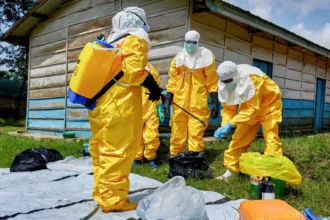
The organisation also reiterated that there is currently no approved vaccine or specific treatment for the Bundibugyo strain, making surveillance, early detection, isolation and public health interventions the primary tools for containing the outbreak.
Health authorities continue to monitor the situation closely as efforts intensify to prevent further spread of the virus across the region.