
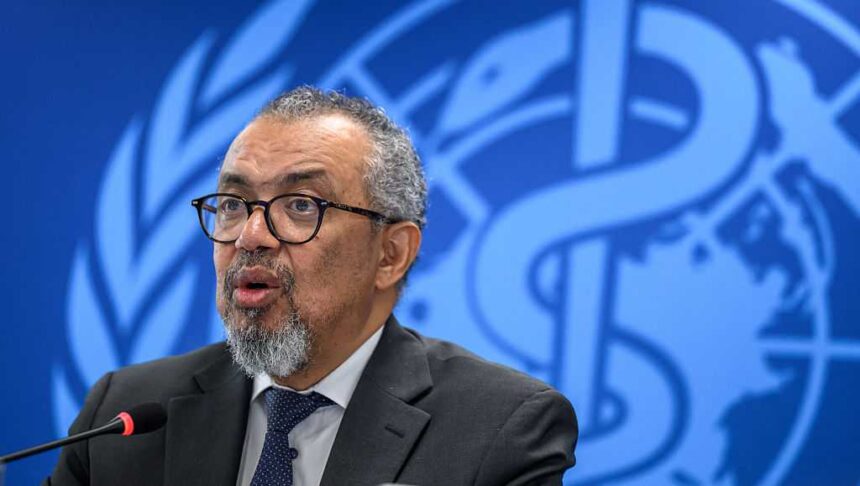
Director-General of the World Health Organisation (WHO), Tedros Adhanom Ghebreyesus, has expressed optimism that the ongoing Ebola outbreak in the Democratic Republic of Congo can still be brought under control despite the increasing number of deaths linked to the disease.
Tedros arrived in Kinshasa, the Congolese capital, on Thursday evening as part of efforts to strengthen and coordinate the international response to the outbreak.
The WHO chief is also expected to visit Ituri Province in northeastern Congo, which has been identified as the epicentre of the latest outbreak.
Speaking shortly after his arrival, Tedros said the spread of the disease could still be halted if health authorities and international partners intensify collaborative efforts.
“That thing can be stopped,” he stated.
He also reiterated the WHO’s opposition to travel restrictions as a strategy for containing the virus, arguing that such measures are often ineffective.
According to him, imposing travel bans “doesn’t help much” in controlling outbreaks.
Tedros assured residents and affected communities that the World Health Organisation would continue supporting local authorities in tackling the health emergency.
“Together, we will overcome this outbreak,” he said, while promising to do “everything in my power to help you.”
Latest figures released by the WHO show that the outbreak has caused 10 confirmed deaths and 223 suspected fatalities since it was officially declared on May 15.
The organisation also disclosed that more than 1,000 confirmed and suspected Ebola cases had been recorded as of May 24, warning that the actual number of infections could be significantly higher.
This marks the 17th Ebola outbreak recorded in the Democratic Republic of Congo, a country that has repeatedly battled the deadly virus over the years.
Health officials have raised concerns that insecurity in eastern Congo is complicating efforts to contain the disease, as ongoing armed conflict and displacement continue to disrupt medical and humanitarian operations.
The region has witnessed years of violence involving several armed groups, including the Rwanda-backed M23 rebels, who have taken control of territories in recent years.
Tedros appealed to all parties involved in the conflict to suspend hostilities and allow health workers operate effectively in affected communities.
“Conflict and displacement make everything harder,” he said.
“I am making a direct appeal to all warring parties in this region: please, declare a ceasefire.
“No cause, no conflict, no grievance is worth condemning innocent people to death from a preventable disease,” the WHO chief added.