
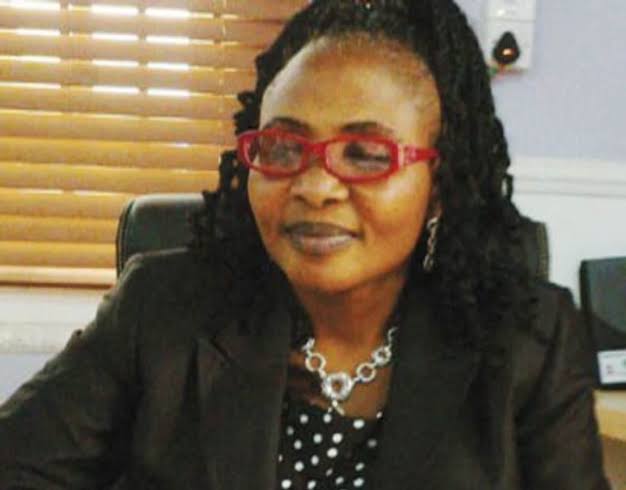
A Senior Advocate of Nigeria (SAN) and founder of Women Empowerment and Legal Aid (WELA), Mrs Funmi Falana, has decried the impact of Nigeria’s worsening insecurity on women and children, describing the situation as “shameful and embarrassing.”
Falana argued that the continued marginalisation of women in governance has contributed significantly to the country’s challenges, insisting that female leadership—anchored on compassion and accountability—has become a national necessity rather than a matter of equity.
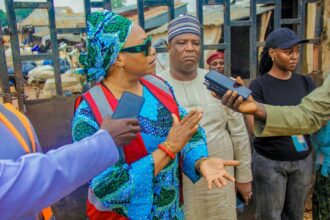
She spoke on Sunday in Ado Ekiti during a visit to the Erelu Angela Adebayo Children’s Home in Iyin Ekiti, where she hosted her annual Christmas celebration for the children and donated food items and gifts.
According to her, Nigeria’s political leadership bears responsibility for the current security crisis and must rise to confront what she described as “evil” to restore safety across the country.
“I have come to celebrate Christmas with the children of Erelu Adebayo Children’s Home, an orphanage in Ekiti State, and this is what I do every year. It is a time to give back to society and to let the children here know that they are as important as their contemporaries elsewhere.
“I want to advise Nigerians to emulate this. This is what people of means should be doing. This is where resources should be channelled to impact the lives of the less privileged. Instead of wasting money on frivolities, these are the things that lift souls. This is the desire of God for men and women,” she said.
Falana maintained that leadership failure had strengthened calls for greater inclusion of women in governance, stressing that Nigeria’s political history has been dominated by men with little to show for it.
“That is why we have continued to say that women are marginalised. We say, let women do it and let us see the difference. Nigeria has continued to have male presidents, and they have continued to fail Nigerians.
“I am saying women can do better because women have the heart of compassion and will be more honest with government resources,” the SAN added.
On insecurity, Falana described women and children as the most vulnerable groups, warning that the country’s future was being endangered.
“It is very sad. Even the future is bleak for them. Homes and schools are no longer secure. You see children being picked up by bandits in the northern parts of the country, even from their schools.
“It is unfortunate that these children, who are not responsible for where they were born, find themselves in this situation. I want to tell Nigerians that these children will not forgive them if our leaders do not stand up to resist this evil and defend Nigerians so that we can have proper security,” she said.
She further criticised the inability of the government to address terrorism and its sponsors, lamenting Nigeria’s growing reliance on external intervention.
“It is shameful and embarrassing that we have found ourselves in a situation where foreign forces reportedly launch attacks because our government appears helpless. Our leaders encouraged this mess and brought us to this level,” Falana stated.
She also recalled her recent call on President Bola Tinubu to convene an emergency strategy meeting on challenges affecting children nationwide.
According to Falana, about 18.5 million Nigerian children are currently out of school, with over 60 per cent—more than 10 million—being girls, placing Nigeria second globally, based on UNESCO data.
She attributed the crisis partly to the failure of several state governments to pay counterpart funds required to access the Universal Basic Education Commission’s matching grant of about ₦135 billion.
“As a result, millions of children are forced into early marriage, while others are regularly recruited by terrorist groups, bandits, kidnappers and other criminal gangs,” she said, adding that an estimated three million Nigerians are internally displaced due to poverty, terrorism and climate change.
Falana further noted that while political leaders celebrated Children’s Day on May 27, 2025, meaningful action remained lacking.
“Nigeria has the second-highest number of stunted children in the world, with 37 per cent of children under five suffering from chronic malnutrition,” she added.