
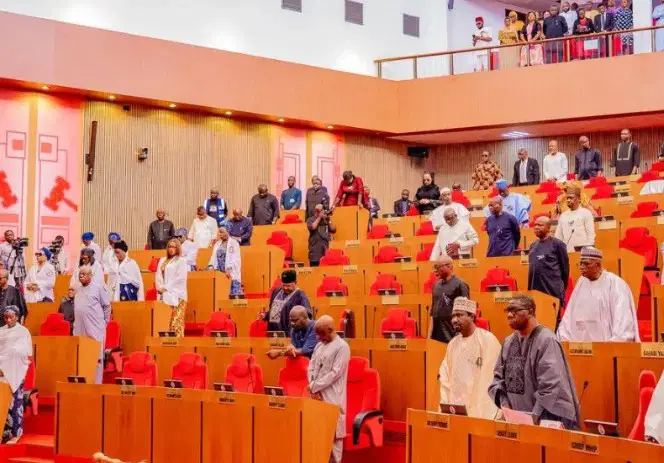
The Senate of Nigeria has reversed recent amendments to its Standing Orders, effectively reopening eligibility for key leadership elections in the 11th National Assembly and potentially widening the field for the 2027 Senate presidency contest.
The decision followed a motion moved by Senate Leader Opeyemi Bamidele during Thursday’s plenary session.
Bamidele explained that amendments earlier introduced to Section 2, Subsection 2, and Section 3, Subsection 1, of the Senate rules could create constitutional inconsistencies and unnecessary tensions if allowed to stand.
According to him, further legislative and constitutional reviews showed that the changes might conflict with broader constitutional provisions governing legislative participation and leadership elections.
The motion was adopted during plenary presided over by Deputy Senate President Jibrin Barau.
With the reversal, all duly elected senators are now eligible to participate in the election of presiding officers without the prior requirement of taking the Oath of Office and Allegiance.
Before the reversal, the Senate had amended its rules to restrict participation in Senate proceedings — including voting in elections for Senate President and Deputy Senate President — to only senators-elect who had taken the oath prescribed in the Seventh Schedule of the Constitution.
The earlier amendment had generated controversy within the chamber and sparked concerns about its implications for future leadership contests.
Thursday’s proceedings also witnessed mild tension after Senator Adams Oshiomhole raised a point of order to clarify his earlier remarks, which had led to a disagreement with Senate President Godswill Akpabio during Wednesday’s sitting.
Oshiomhole insisted that lawmakers should not be prevented from expressing their opinions on matters before the Senate.
However, Deputy Senate President Barau ruled him out of order, stating that the issue had already been resolved by the chamber.
Bamidele also referenced the Senate Standing Orders, maintaining that any additional concerns should be presented through a substantive motion rather than repeated floor interventions.
The Senate leader further urged Oshiomhole to avoid what he described as “drama” on the floor of the chamber, referring to the exchanges that characterised the previous day’s proceedings.