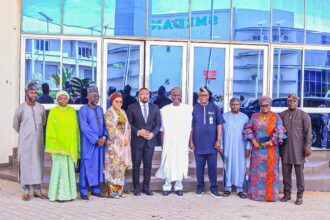


The Finance Minister and Coordinating Minister of the Economy, Taiwo Oyedele, has assured investors and the private sector that Nigeria will maintain the economic reforms introduced in recent years.
He gave the assurance on Thursday at the launch of the Nigerian Economic Summit Group’s Private Sector Outlook 2026 in Lagos, stressing that policy consistency and predictability remain key to attracting investment and sustaining growth.
Oyedele warned that reversing reforms or sending mixed policy signals could weaken investor confidence, noting that the next phase of the country’s economic agenda will be judged by tangible outcomes such as job creation, productivity gains, and improved living standards.
“From the perspective of the private sector, four factors are critical to drive investment in this phase: first, policy consistency, reforms must be sustained. This is why we are not looking back. Nothing undermines confidence more than policy reversals or mixed signals. Businesses need to know that today’s decisions we still hold tomorrow, unless unpredictable circumstances require otherwise.
“Second, predictability beyond consistency, there must be predictability. This applies to tax, environment and tax laws, trade policies, foreign exchange rules and regulatory processes. Third is the cost of doing business. We are confronting the structural cause that businesses face, ranging from multiple taxation, logistics inefficiencies, supply chain bottlenecks, energy constraints and regulatory overlaps. Reducing these constraints is one of the fastest ways to unlock growth for our country.
“We are currently targeting real GDP per capita growth of around four to 5% to really make a meaningful impact, because if our GDP is growing at around 4% and we have population growth at 2% plus. It’s not making an insignificant impact in lifting people out of poverty and creating shared prosperity. Fourth is access to capital. Investment cannot happen without financing. We’re therefore strengthening domestic capital markets, access to credit and long-term financing structure for infrastructure and industry. You must have observed that the government has been particularly focused on the credit economy, whether it’s no fund for students or whether it’s credit call, where you’re trying to do consumer finance, and the ones for industries like BoI (Bank of Industry), trying to provide credit at affordable rates, and so forth. We think that we can stimulate economic growth faster by creating affordable credit economy and access to capital.”
He said Nigeria’s reform programme is entering a critical stage where success will depend on measurable impact rather than policy announcements, adding that recent measures have begun to stabilise key indicators such as exchange rates and revenue performance.
“We have started to see early signs of stabilisation and early signs of growth with a more aligned exchange rate environment, improving revenue performance and clearer policy signal to the market. While we recognise the progress made so far, we are mindful that stabilisation alone is not success. It is simply the foundation upon which success must now be built.
“So what’s the real test is moving from reform to growth. The next phase we are now entering is where reforms are tested based on the outcomes that they produce and the impact that they make. Because reforms on their own do not create growth. We need investment at scale to create decent jobs, enhance productivity and improve living standards. But investment does not respond to announcements. It responds to confidence built on predictable policies and clear rules consistently applied within a competitive framework to achieve acceptable risk-adjusted returns. If the environment is uncertain, the investment will wait. But if we provide the right environment, investment will not only come, it will stay and grow.”
On productivity, he stressed the need to improve efficiency across key sectors, including agriculture, manufacturing, energy, and the digital economy, noting that growth driven mainly by consumption is unsustainable.
“But productivity does not happen in isolation. It requires infrastructure, skills development, technology adoption and a supportive policy environment,” he said, adding that stronger collaboration between government and the private sector is essential to achieving sustainable growth.
Oyedele said the government would continue to deepen reforms, improve the ease of doing business, and strengthen coordination across all levels of governance, while calling on the private sector to invest with a long-term outlook and maintain transparency and compliance.
He acknowledged potential risks such as reform fatigue, inflationary pressures, and political tensions ahead of elections, but maintained that they can be managed through discipline and collaboration.
“This phase that we have done required courage, and that has been demonstrated by the political leadership. The phase we are now entering requires something different, and that is discipline, focus and diligent execution. This is what we promise to deliver.”