

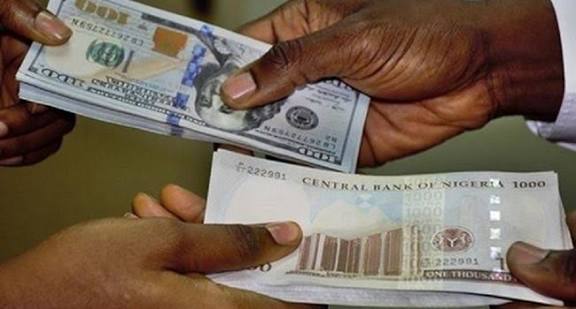
The naira held relatively firm on Tuesday, with improved liquidity in the Nigerian Foreign Exchange Market (NFEM) keeping the official rate lower than prices quoted in the parallel market.
Data from the NFEM showed a closing volume-weighted average of ₦1,448.03 per US dollar on November 18, 2025, representing a mild decline of about ₦5.60 (-0.39%) compared to the previous trading session.
In the informal market, however, cash-based transactions continued to attract higher premiums. Popular rate-tracking platforms indicated ₦1,455–₦1,460 per dollar, maintaining a spread of roughly ₦7–₦12 above the official NFEM benchmark. Currency dealers noted that physical cash transactions typically command firmer pricing than institutional flows routed through the official window.
Understanding the Rates
NFEM / NAFEM:
This refers to the official daily volume-weighted rate derived from interbank and market-wide FX trades. It serves as the reference point for corporates, exporters, and large-volume transactions.
Parallel market:
These prices originate from the informal retail cash segment monitored by private aggregators, where immediate physical demand for dollars often pushes rates above the official benchmark.
Recent Trends and Drivers:
Market participants continue to react to improved FX supply and reduced domestic borrowing costs following the Central Bank of Nigeria’s policy-rate cut earlier in September. Analysts say enhanced inflows, moderated inflation, and periodic interventions have helped stabilize the currency and reduce the volatility recorded through 2024 and early 2025.
Impact on Businesses and Consumers:
Companies with sizeable foreign-exchange needs typically turn to the NFEM to obtain dollars at more favourable official rates. Meanwhile, small businesses, travellers, and individuals seeking cash dollars often contend with the higher parallel-market premium. Remittances and personal transfers also vary depending on whether transactions are executed through banking channels or informal exchanges.